
Last updated October 16, 2026
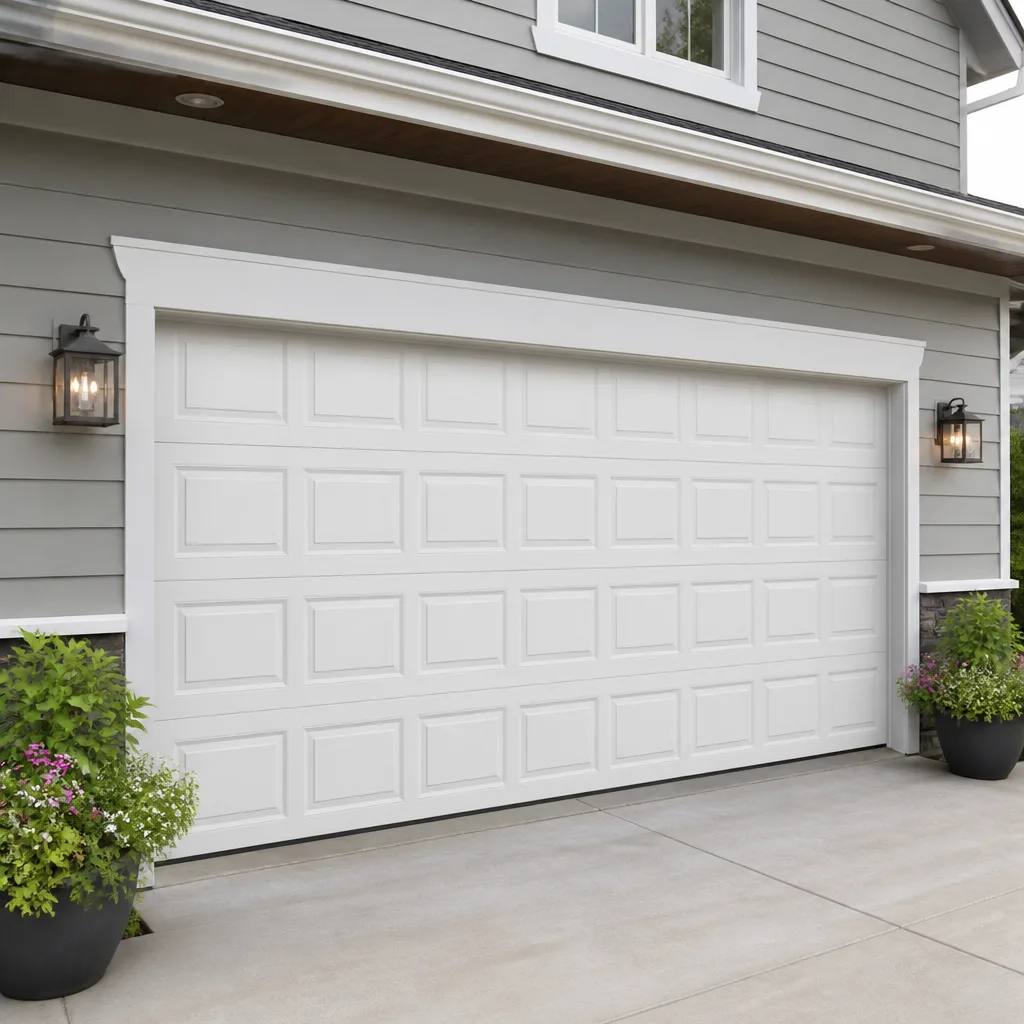 Raised-panel steel
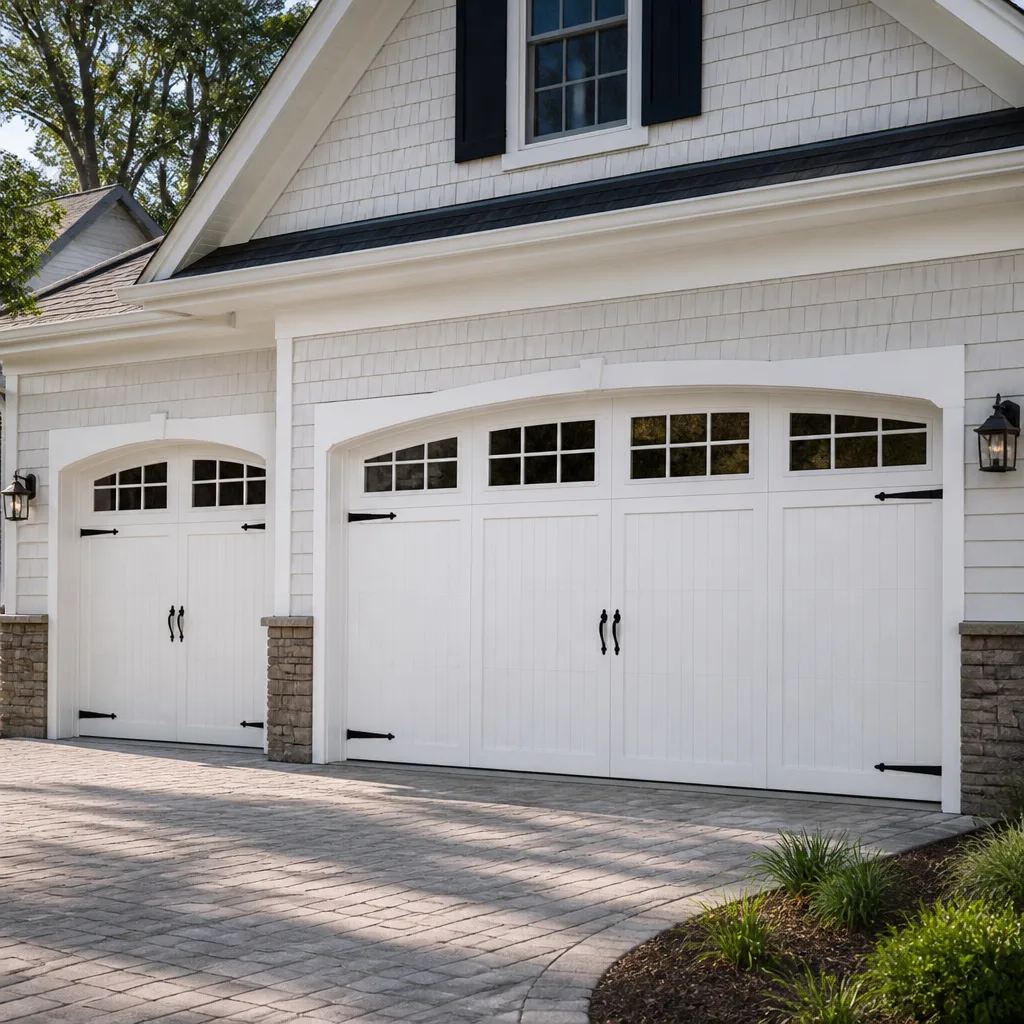 Carriage house
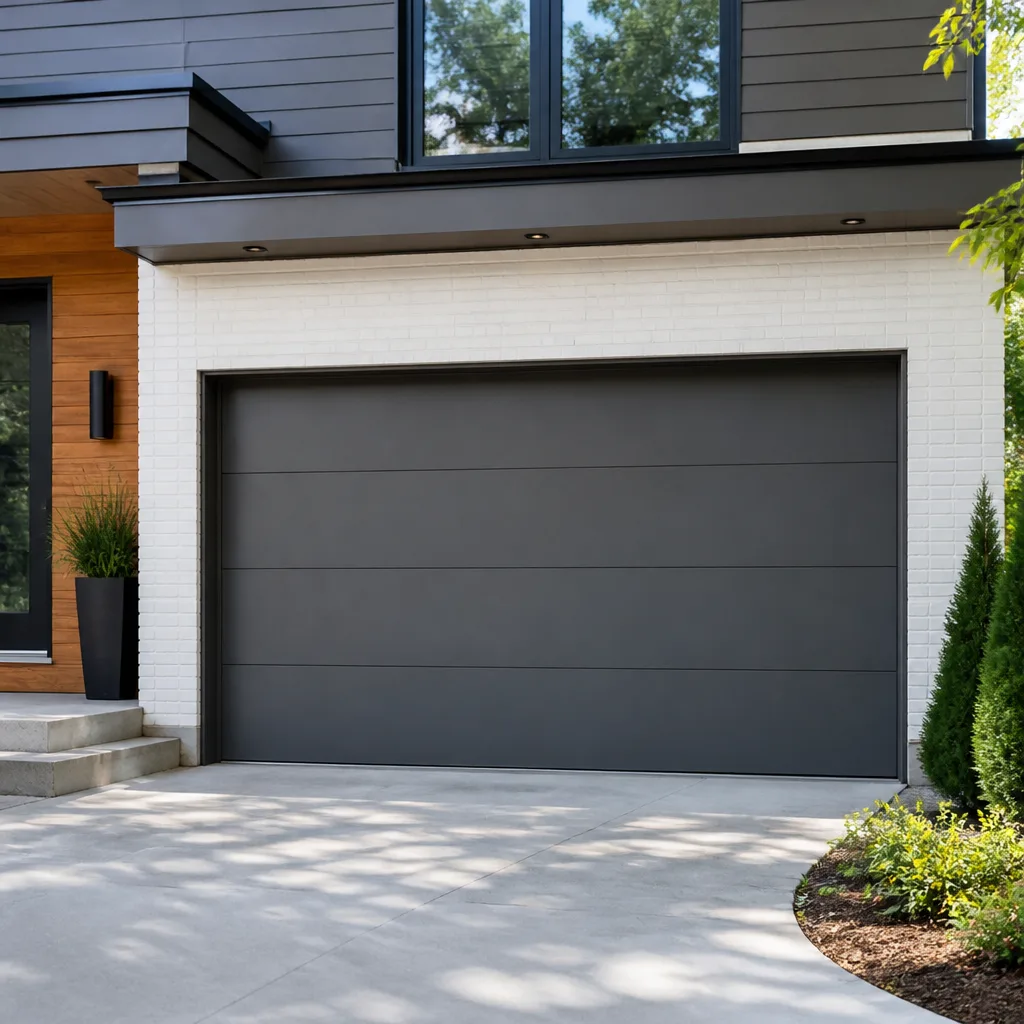 Modern flush
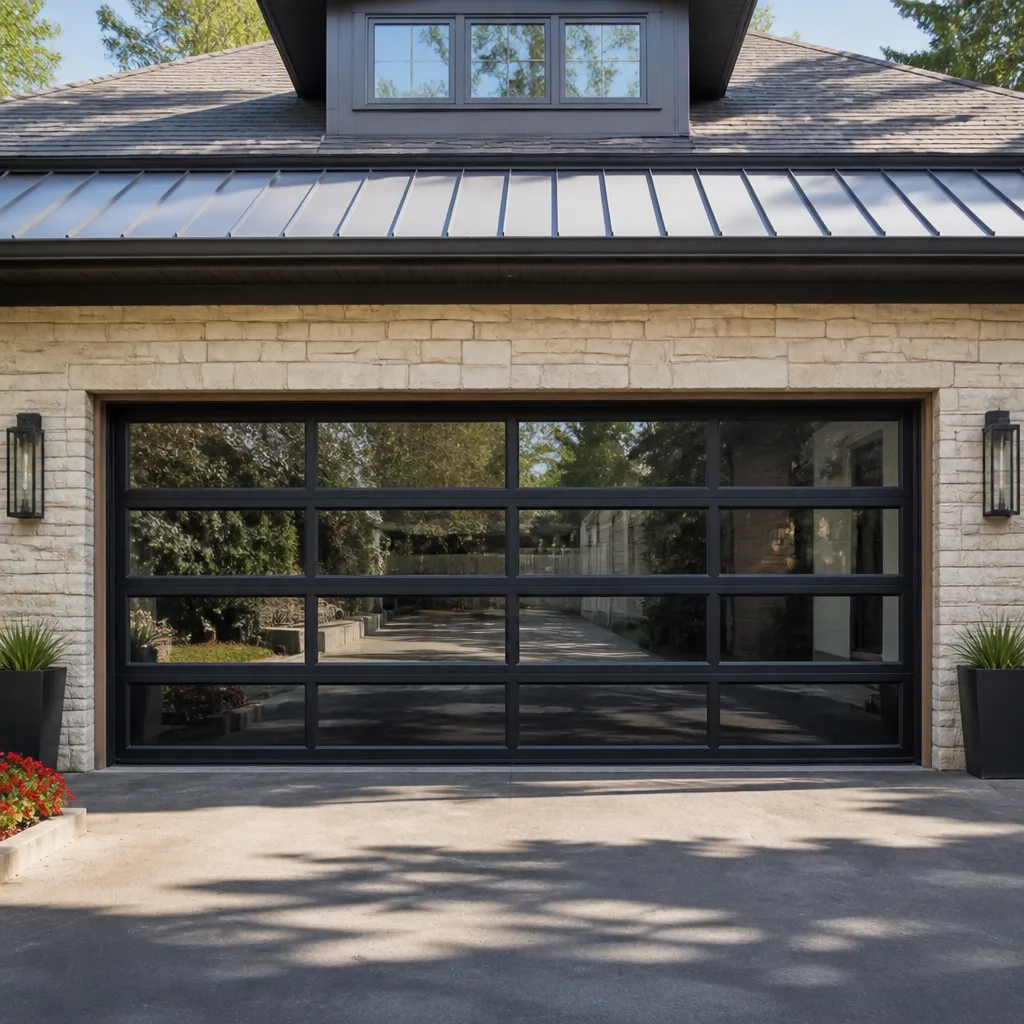 Full-view glass
 LiftMaster openers
 Chamberlain openers
Full 25-point door and opener safety check with every visit - springs, cables, rollers, tracks, and your LiftMaster or Chamberlain opener included
You get a price before we start. It does not change when the truck arrives.
Get your free estimateGarage Door Warning Signs: A Marietta Homeowner’s Reference Guide
A torsion spring under full tension stores roughly the same energy as a car door slamming at full force. That’s not a scare tactic, it’s a measurement. And it’s why a spring that’s been clicking for three weeks isn’t a minor annoyance. It’s a component telling you it has weeks left before a sudden, loud, and occasionally dangerous failure. This guide walks through the specific sounds, movements, and timing quirks that Marietta homeowners hear and see in their garages every day, and you can find The Complete Guide to Garage Door in Marietta for a broader overview. We’ll match each warning sign to the component that’s actually failing, explain what’s happening in plain language, and give you an honest read on whether it’s a call-today situation or something that can wait for a scheduled appointment. No pressure. No upselling. Just the information you need to make a smart call.
Quick Answer
The most common garage door warning signs in Marietta are a grinding noise that stops when you lift the door manually (worn rollers), a loud bang during opening (torsion spring failure), a door that reverses before fully closing (photo-eye misalignment), and an opener that hesitates or won’t respond on the first press (limit switch drift or a failing capacitor). Any loud bang, visible gap in a torsion spring, or a door that won’t stay closed is a same-day service call. Everything else can typically wait for a scheduled appointment.
Styles & brands we work with
Table of Contents
- Symptom-to-Component Diagnostic Table
- How to Read the Sounds Your Door Makes
- The Torsion Spring: What to Look For and What Not to Touch
- Why Your Door Hesitates on Cold Marietta Mornings
- Same-Day vs. Scheduled: How to Gauge Urgency
- Photo-Eye Misalignment: The Most Common False Alarm
- Cables and Drums: The Quiet Problem That Gets Loud
- Opener Capacitor Failure: The Click-But-No-Go Signal
Symptom-to-Component Diagnostic Table
Before you call anyone, take 60 seconds to observe how your door behaves. The table below matches what you’ll see and hear to the component that’s usually responsible. This is the same first-pass diagnosis our technicians do in the driveway, and it applies to every major brand we service, including LiftMaster, Chamberlain, Genie, and Raynor.
| Symptom | Likely Cause | Urgency |
|---|---|---|
| Door moves slowly on the way up | Opener capacitor weakening or spring tension dropping | Scheduled appointment |
| Grinding on one side only | Worn roller bearing or cable off the drum | Scheduled appointment |
| Door doesn’t close fully, reverses partway | Photo-eye misalignment or limit switch drift | Scheduled appointment |
| Loud bang during opening | Torsion spring failure | Same-day service |
| Door sags or leans when partially open | Broken cable or damaged spring support | Same-day service |
| Opener hums but door doesn’t move | Stripped gear in opener drive or broken spring | Same-day service |
| Door jerks or shudders while moving | Track misalignment or loose hardware | Scheduled appointment |
| Door won’t stay closed, reverses immediately | Photo-eye blocked or limit switch set incorrectly | Scheduled appointment |
One thing worth saying plainly: a door that’s making a new noise is not necessarily a door about to fail. Some of these symptoms are genuinely minor. But a door that’s making a new noise and moving differently than it did a month ago? That’s a pattern worth paying attention to. The table above is a starting point, not a final answer. Every Marietta garage is a little different, and humidity from a Cobb County summer affects components in ways that a diagnostic table can’t fully capture.
How to Read the Sounds Your Door Makes
The fastest diagnostic tool you own is your ears. Two garage doors can look identical from the driveway and tell completely different stories when they move. Here’s how to translate what you’re hearing.
The rhythmic grind: This is a repeating metal-on-metal scrape that matches the speed of the door. It’s almost always a roller bearing that’s worn out. Rollers are the small wheels that guide your door up and down the track, and they have a service life. In Marietta’s humidity, roller bearings rust, seize, and then grind against the track. A worn roller makes a sound that repeats with every revolution of the wheel. A new roller is quiet.
The scrape that stops when you lift manually: This is the test that separates a roller problem from a track problem. Pull the emergency release cord (the red handle hanging from the opener rail) and lift the door by hand. If the scraping stops, the rollers are the issue, and it’s a straightforward fix. If the scraping continues even when you lift manually, the track itself is binding. That’s a bigger job, and it’s worth a professional look. Our Garage Door Repair in Marietta page covers what goes into track work and why we always include a written price before any repair starts.
The squeal: A high-pitched squeal that happens every time the door moves usually means a dry or worn bearing somewhere in the system. It can come from rollers, the opener’s drive rail, or the cable drums. Squeals are annoying but rarely urgent. A scheduled appointment handles it.
The click-click-click: If you hear a clicking sound when the door is closed and you’re watching it, not operating it, that’s often the torsion spring settling. Springs under tension make small adjustment sounds as temperature changes pull at the metal. A click or two per day is normal. A click every time you walk past, or a clicking that’s new and persistent, is worth a closer look at the spring.
The bang: You’ll know it when you hear it. A torsion spring failure sounds like a gunshot in the garage. It’s loud, sudden, and unmistakable. If you hear it, stop using the door immediately and call for service. A door with a broken spring is not safe to lift by hand, and it’s not safe to leave half-open either. More on that below.
The Torsion Spring: What to Look For and What Not to Touch
The torsion spring is the heavy coil mounted on a metal shaft above your door. It does most of the lifting, counterbalancing the weight of a door that can easily run 150 to 250 pounds. The spring winds and unwinds every time the door opens and closes. Most residential torsion springs are rated for roughly 10,000 cycles, which translates to somewhere between 7 and 12 years of typical use in a Marietta household. That number drops fast if the door is opened more than four times a day, which is common in homes where the garage is the primary entrance.
Here’s what you can check safely: stand inside the garage with the door closed, and look at the spring. You’re looking for a visible gap in the coil, a space where the tightly wound metal separates. A healthy spring is one continuous coil with no gaps. A spring that’s near the end of its service life will show a hairline separation at one end of the coil. That gap may only be an eighth of an inch wide. You’ll need to stand back near the wall and look along the length of the spring to see it.
Do not get close to it. Do not reach up to measure the gap. Do not touch the spring, the shaft, the cable, or the mounting brackets. A torsion spring under tension holds enough stored energy to cause serious injury. If you see a gap, or if you heard a bang and the spring is hanging in two pieces, the right move is to close the door, walk away from it, and call someone who works on these every day. Our Garage Door Spring Repair in Marietta page explains what a proper spring replacement involves, including why we never let a homeowner attempt this repair themselves. Most torsion-spring replacements in the Marietta area run $150 to $280, parts and labor included. That’s a number worth knowing before you pick up the phone.
One more thing worth knowing if you’re a Marietta homeowner: springs don’t usually fail silently. They click, they creak, they make small popping sounds as the metal fatigues. A spring that’s been making noise for three weeks is giving you clear notice. That’s the window when replacement is cheap, predictable, and scheduled on your terms. Wait too long, and the spring chooses the moment. Usually at 7:15 on a weekday morning with the car still inside.
Why Your Door Hesitates on Cold Marietta Mornings
Marietta doesn’t get Minnesota cold, but it gets cold enough. On a February morning when the temperature drops into the low 30s, a garage door that works fine every other day may hesitate, stutter, or refuse to open on the first press. Here’s what’s actually happening.
Cold affects your door in two ways. First, the metal parts contract slightly. A torsion spring that’s correctly tensioned for a 65-degree afternoon is slightly stiffer at 32 degrees. The same spring has to work a little harder to lift the same door. If the spring tension is already marginal, that extra resistance is enough to make the door feel stuck. The opener may hum, try, and give up. On a warm day, the same door works fine. That inconsistency is the spring telling you it’s wound too loosely or losing tension. A spring that’s been in service for eight or nine years often tests fine on a mild day and fails only when the temperature drops.
Second, the opener’s capacitor doesn’t love the cold. The capacitor is an electrical component inside the opener’s motor housing that stores and releases the surge of energy needed to get the door moving. Capacitors weaken with age, and cold temperatures reduce their output. A capacitor that’s three years old and working at 80 percent capacity on a warm afternoon may dip below the threshold needed to start the motor on a 33-degree morning. The door clicks. Nothing moves. An hour later, when the garage warms up a few degrees, the door works again.
That “works fine most of the time” pattern is the most expensive place to stay, because intermittent problems become permanent problems. The failure usually happens at the worst possible moment, typically the one morning you can’t be late. If your door hesitates only on cold mornings, mention that specifically when you call for service. It tells the technician exactly where to look, and it saves you the cost of a second trip.
Same-Day vs. Scheduled: How to Gauge Urgency
Not every warning sign deserves a panic call. Here’s a straightforward way to sort what you’re seeing and hearing into two categories: call today, or schedule at your convenience. The goal is to give you the honest assessment most homeowners want and rarely get from a company that benefits from urgency.
Same-day service is warranted when:
- The door won’t stay closed. A garage open to the street in Marietta is an invitation, plain and simple.
- You heard a loud bang and the spring is visibly broken. The door is now dead weight, and lifting it by hand risks injury.
- The door is stuck in the open position and won’t budge. You need to secure your home, and a professional needs to assess the spring tension before anyone touches the door.
- The cable has come off the drum and is hanging loose. A dangling cable is a sign that the spring tension is compromised or the drum is misaligned. Either way, the door is not safe to operate.
- The opener runs but the door doesn’t move, and the door feels heavy when you pull the release cord and try to lift it manually. That’s a spring that’s given out, not an opener problem.
Scheduled service is fine when:
- The door is noisy but moves normally. Grinding rollers, squealing bearings, and creaking hinges are all attention items, but they rarely turn into emergencies.
- The door is slow or hesitant on cold mornings only. You’ve got time, though you shouldn’t wait indefinitely.
- The door reverses partway down but closes when you hold the button. That’s a limit switch or photo-eye adjustment, not an emergency.
- The opener’s wall button or remote is flaky. Intermittent electrical issues are annoying, but they don’t usually mean the door is unsafe.
Here’s the part that matters: a reputable company will tell you when you don’t need same-day service, which is why we published How to Hire a Garage Door Contractor in Marietta: A Step-by-Step Guide. That’s a test we hold ourselves to. If a Marietta homeowner calls us with a noisy roller and we tell them it can wait a week, that’s the whole point of working under the Kingswell standard. The written price comes before the work, the real arrival window means we show up when we said we would, and the clean job site means you never know we were there except that the door finally runs right. A company that pushes every call toward emergency pricing is telling you something about how they operate.
Photo-Eye Misalignment: The Most Common False Alarm
Most garage doors in Marietta are equipped with photo-eye sensors, the two small units mounted near the floor on either side of the door opening. They project an invisible beam across the doorway. If anything interrupts that beam while the door is closing, the door reverses. It’s a safety feature, and it works. The problem is that photo-eyes are sensitive, and they get knocked out of alignment more often than any other component on the door.
The most common household culprits are the same everywhere in Georgia: a broom handle that caught the sensor bracket, a bicycle wheel that nudged it, a trash can dragged past on collection day. Marietta’s garbage and recycling pickup schedule means those bins move a lot. Enough to bump a sensor out of position by a fraction of an inch, which is all it takes to break the beam.
When a photo-eye is misaligned, the door will start to close, then reverse as if something is in the way. The opener’s light usually blinks. It’s an odd and frustrating problem, because the door seems to be working perfectly except for that one stubborn refusal to stay down. Here’s the five-second check: look at each sensor. There’s a small light on each unit. One should be solid, and the other should be blinking or off. If both lights are solid, the beam is likely aligned and the problem is elsewhere. If one light is blinking, the beam is broken.
Fixing a misaligned photo-eye is often as simple as gently adjusting the bracket until both lights come on, but it’s not always obvious which way to nudge the sensor. If you can’t get the lights to cooperate in a couple of minutes, don’t spend an hour on it. That’s a five-minute fix for a technician who does it every day. It’s also exactly the kind of small job that gets expensive when a company pads it into a larger repair. Our Garage Door Installation in Marietta page talks about how we approach smaller fixes the same way we approach full installs: a written price first, no surprises after.
Cables and Drums: The Quiet Problem That Gets Loud
Your garage door has two cables, one on each side, that wind and unwind around drums mounted on the spring shaft. These cables connect the spring system to the door itself. When everything is working, the cables wrap neatly around the drums in tight, even coils. When a cable comes off the drum, it hangs loose or wraps unevenly. The door starts to tilt. And if one cable breaks, the remaining cable is suddenly holding the entire weight of the door. That’s when things get dangerous fast.
The warning signs of cable trouble are subtle because cables don’t make much noise on their own. What you’ll notice instead is a change in the door’s movement. The door tilts slightly to one side when it’s halfway open. There’s a small gap between the door and the frame on one side that wasn’t there before. The door shudders as it moves. The cable itself looks slack, or you can see gaps in the winding around the drum. If you see any of these, stop using the door.
Cable repair is not a DIY job. The cables are under the same tension as the spring, and the failure mode is sudden. We’ve seen Marietta homeowners trying to re-seat a cable onto a drum with a pair of pliers while the spring is still under tension, and it’s the most dangerous thing a person can do in their garage. The right move is to call a professional. A worn cable is a $40-to-$90 part in most cases, and the labor is straightforward for someone who’s done it a thousand times. It’s not worth what an emergency room visit costs, and it’s certainly not worth what a broken spring does to the rest of the door when the system fails catastrophically.
This is also where brand matters. Cables and drums are not universal. A LiftMaster system uses different drum geometry than a Genie, and a Raynor setup has its own specifications. When we quote a cable repair, we quote the specific part for the specific system on the door. That’s part of why every repair starts with a written price. You know what you’re paying for before anyone touches a wrench.
Opener Capacitor Failure: The Click-But-No-Go Signal
The most confusing warning sign in the garage is the click-but-no-go. You press the wall button or the remote. You hear a click. The opener’s lights come on. But the door doesn’t move. Or it moves half an inch and stops. Then, the next time you press the button, it works perfectly. That’s the opener’s capacitor giving you notice.
The capacitor is a small cylindrical component mounted inside the opener’s motor housing. It stores a burst of electrical energy and releases it to get the motor spinning. Think of it like the starter on a car. Without that burst, the motor can’t turn over. When the capacitor starts to fail, it delivers a weaker and weaker burst. Sometimes it’s enough. Sometimes it isn’t. The click you hear is the relay engaging and the capacitor trying to deliver. The no-go is the capacitor coming up short.
A failing capacitor often behaves worse in cold weather, as we covered earlier, and better after the opener has been used a few times. The first press of the morning is the one that fails. The second press, a few seconds later, works. That pattern is textbook capacitor failure. It’s not the wall button. It’s not the remote battery. It’s not the circuit board. It’s the capacitor.
The repair on this one is straightforward but model-specific. A Chamberlain capacitor and a LiftMaster capacitor look similar from the outside and have completely different ratings on the inside. The wrong capacitor will burn out fast, or worse, damage the motor. A capacitor replacement usually runs $80 to $150 including the part, and it’s a scheduled service call. But here’s the honest part: if your opener is 15 or 20 years old and the capacitor is failing, it’s worth having a conversation about whether a new opener makes more sense than a repair on a unit that’s nearing the end of its expected service life. That conversation is free, and the answer depends on the specific opener you have. No pressure either way. We’ll give you the numbers for both options and let you decide.
When to Call a Professional
Some garage door problems are genuinely dangerous, and the line between “I can handle this” and “I need a professional” is not where most people think. Any issue involving the torsion spring, cables, or cable drums should never be DIY. The stored energy in these components can cause serious injury. Beyond safety, there’s a money question: a repair that fails because it wasn’t done right costs more than the repair would have cost in the first place. That’s why the Kingswell Guarantee exists. Every job includes a written price before work starts, a real arrival window, a clean job site, and a written guarantee on the repair. The 365-Day Done Right Promise means if the repair fails within a year, we come back and fix it at no charge. That commitment is in writing, not just said at the door. Bramwell Garage Doors Marietta offers free estimates throughout the Marietta area, call (912) 520-4208 to schedule.
See the difference
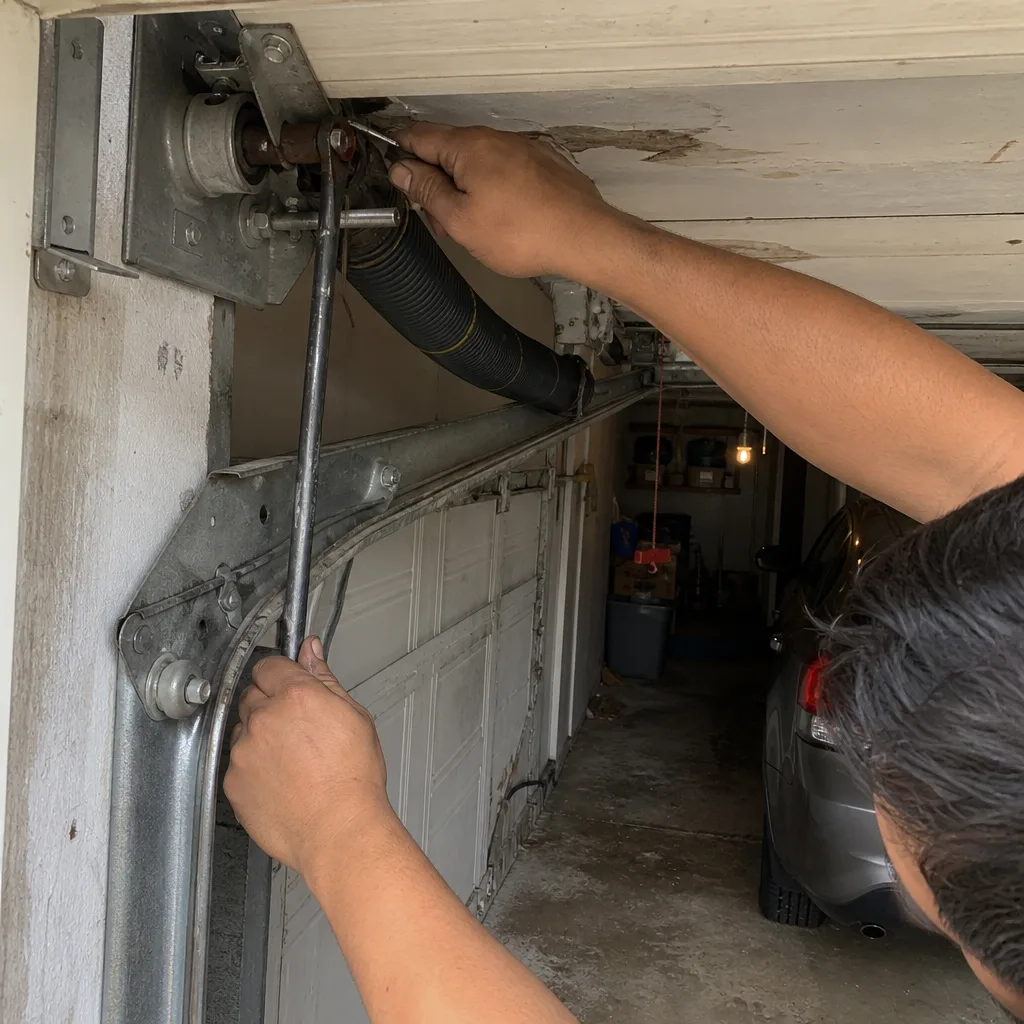 Before
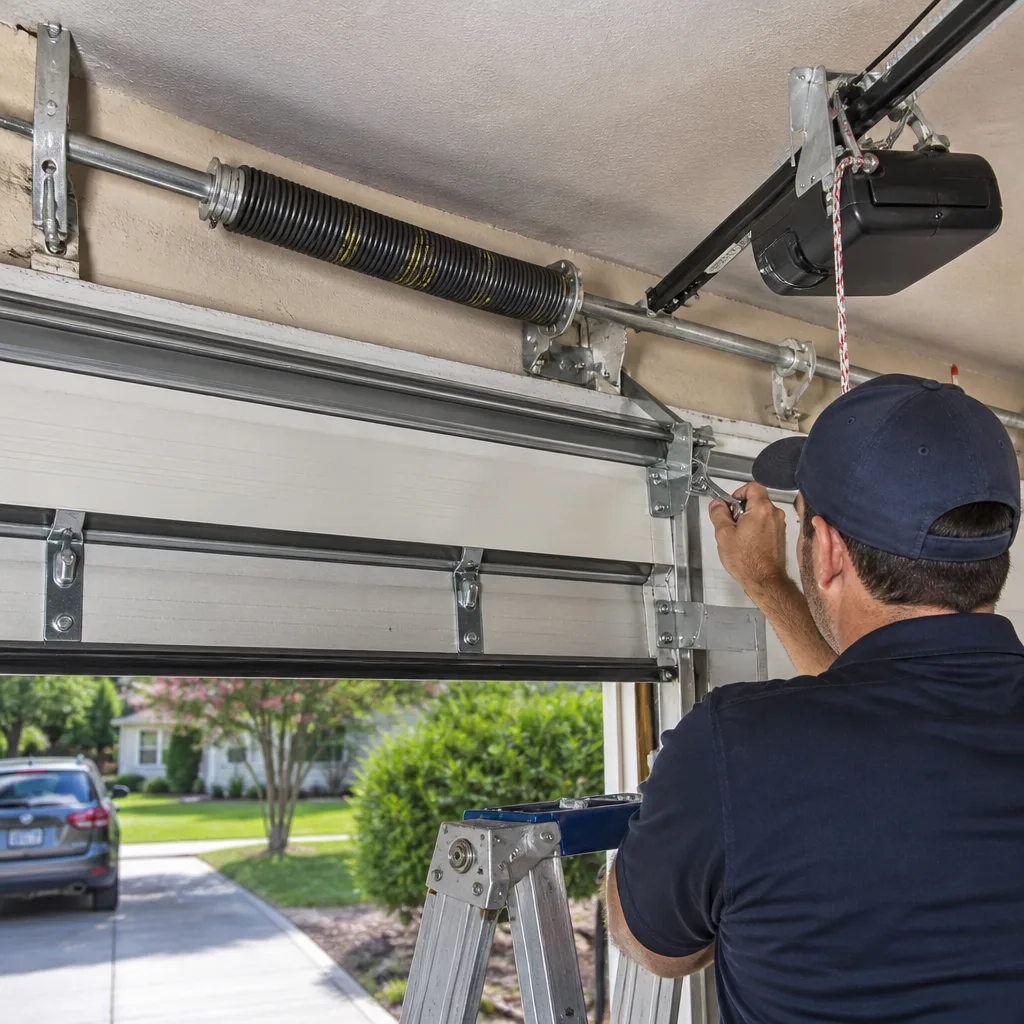 After
After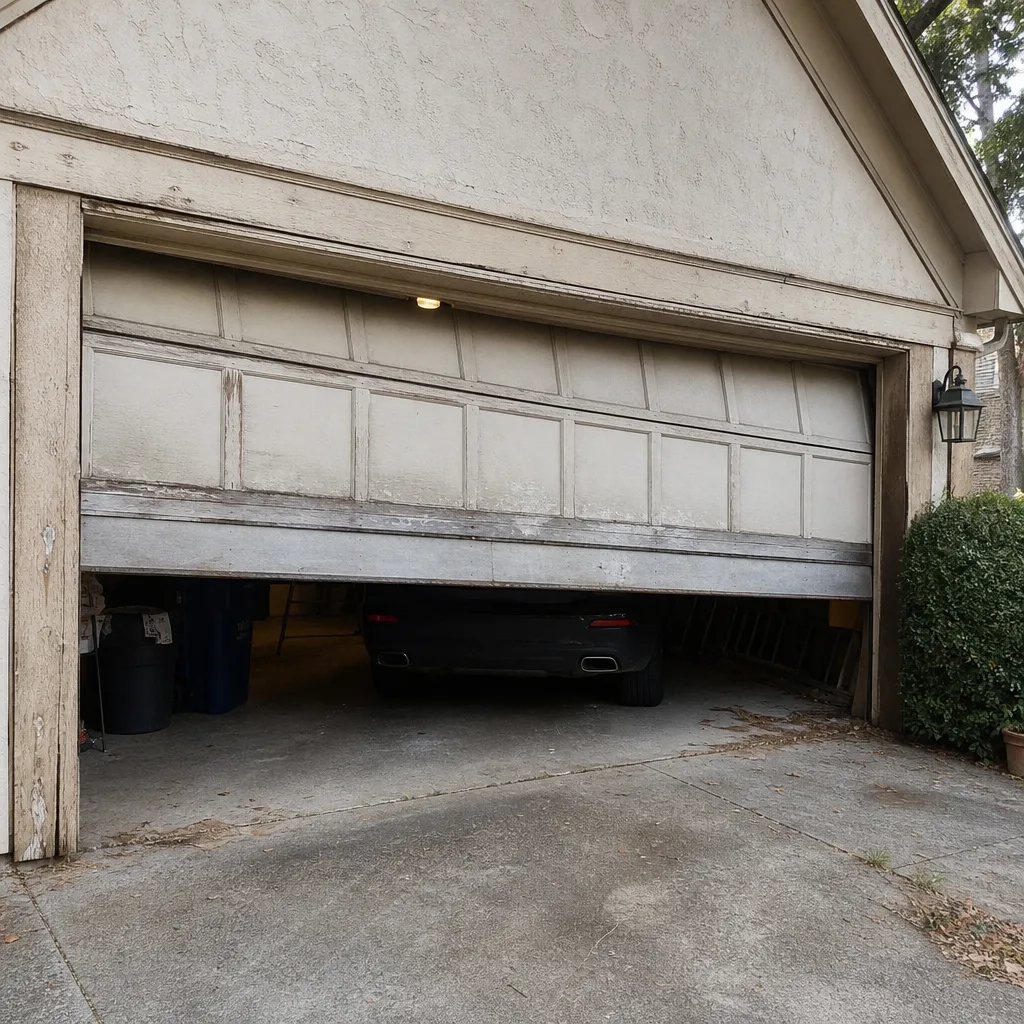 Before
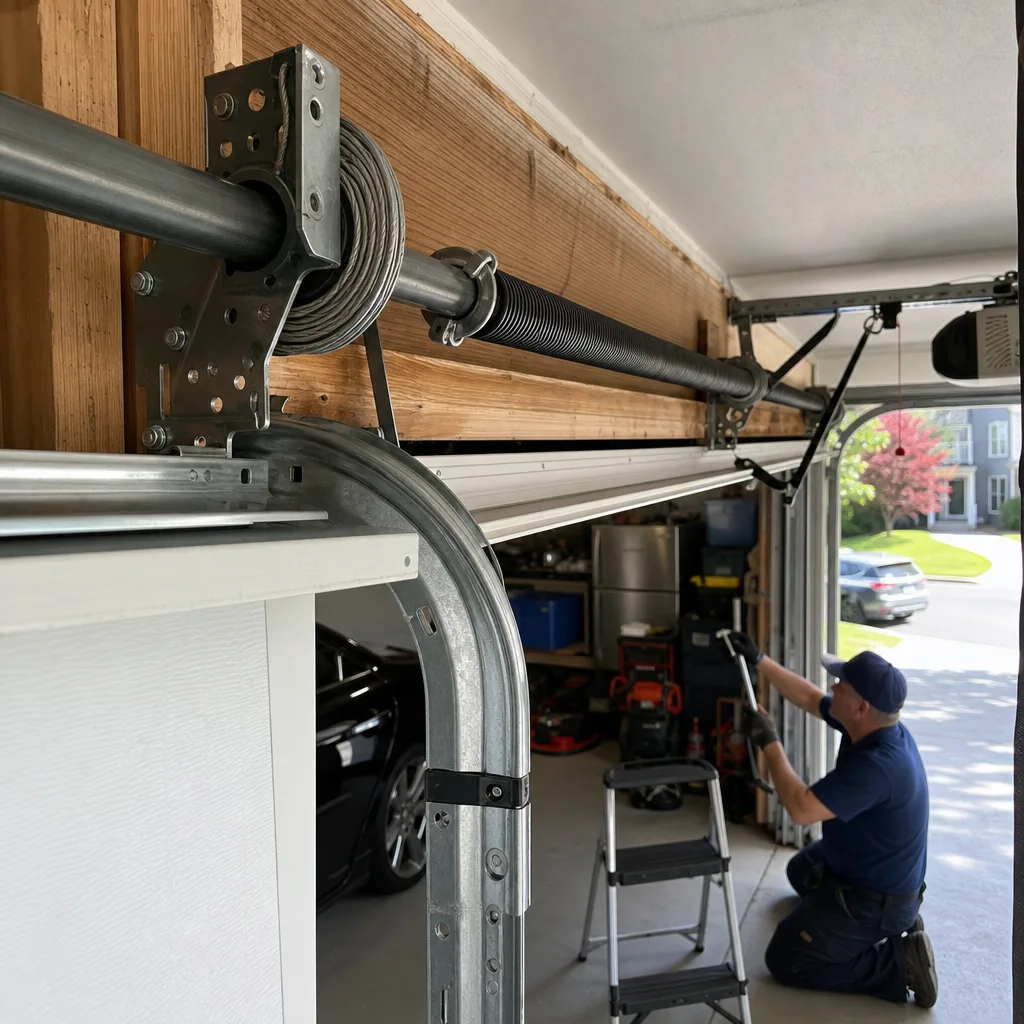 After
After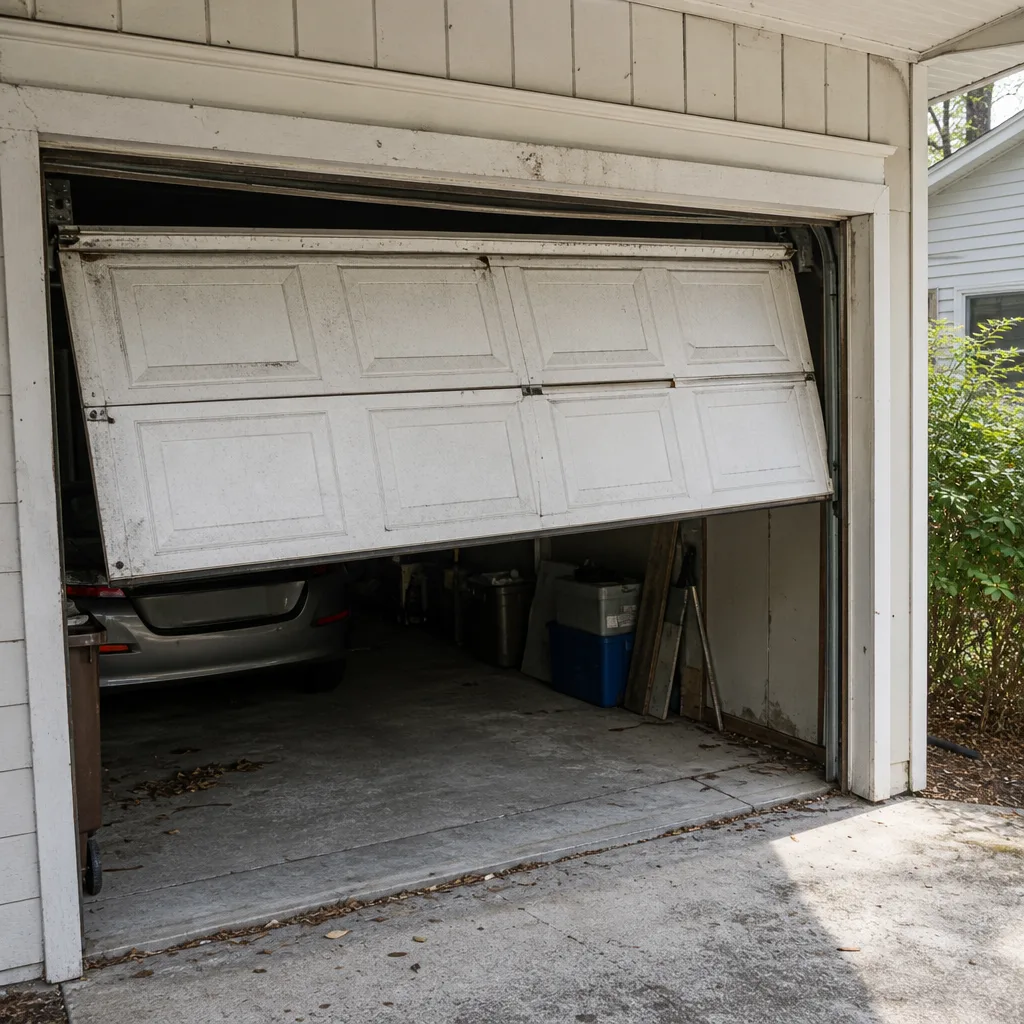 Before
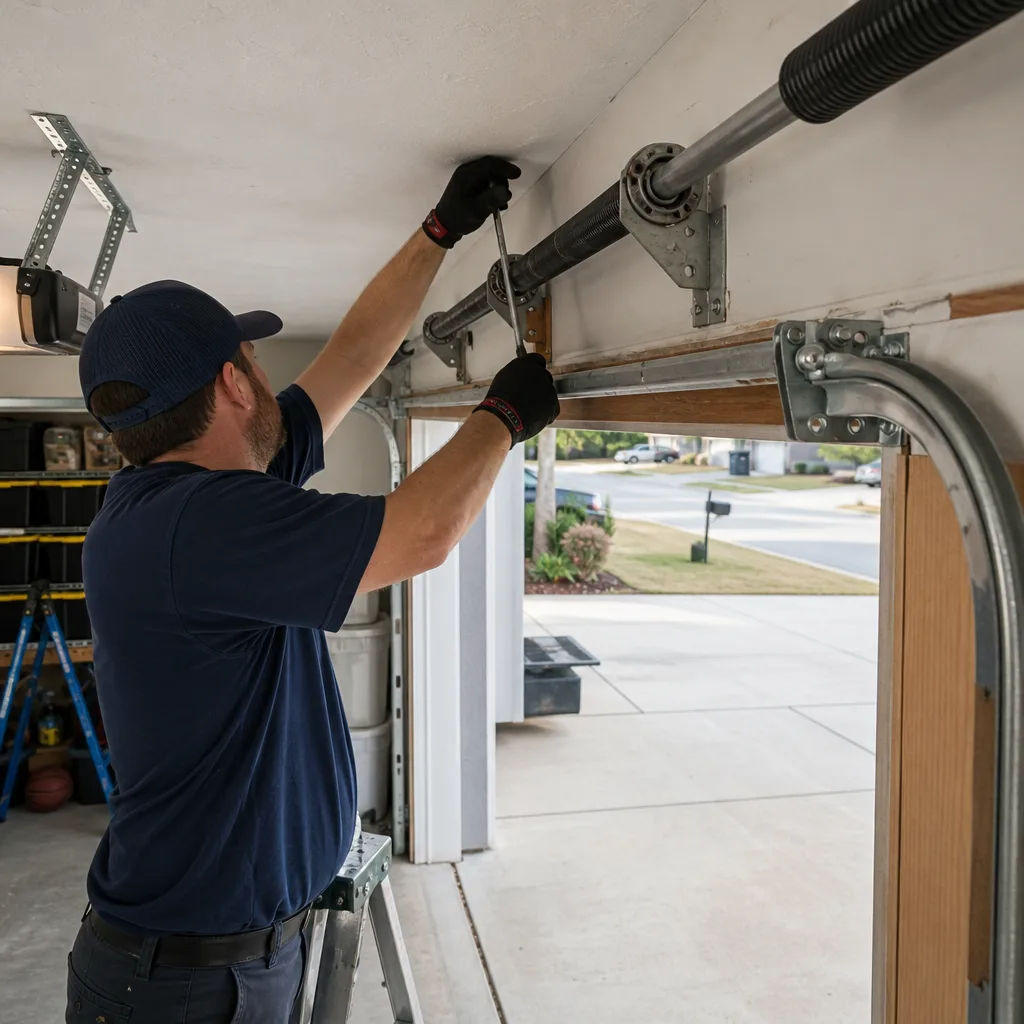 After
AfterFrequently Asked Questions
Most torsion-spring replacements in the Marietta area run $150 to $280, parts and labor included. Extension spring systems tend to run slightly less. The final number depends on the spring’s size and the door’s weight, and a written price is provided before any work starts. Call (912) 520-4208 for an exact quote, estimates are free.
Yes, for urgent issues like a broken spring or a door that won’t close, same-day service is available throughout the Marietta area. A live person answers the phone 24 hours a day, 7 days a week, including nights and weekends. Call (912) 520-4208 and we’ll give you a real arrival window, not a four-hour guess.
Cold temperatures reduce the output of the opener’s capacitor and stiffen the torsion spring. If either component is already marginal, the combination is enough to make the door refuse to move on a cold morning even when it worked fine the afternoon before. It’s a warning sign that one of those components is nearing the end of its service life. Call (912) 520-4208 to have it checked before it fails completely.
Look for a visible gap in the coil of the torsion spring while the door is closed. A healthy spring is one continuous coil. A spring near the end of its life will show a hairline separation at one end. You may also hear clicking or popping sounds from the spring area. If you see a gap or hear these sounds, schedule a replacement before the spring breaks on its own schedule.
No. At Bramwell Garage Doors Marietta, the written price is provided before any work starts, and the number on the invoice matches the number you approved. If the technician discovers an additional issue during the repair, they’ll stop, explain what they found, and provide a new written price before proceeding. You’re never committed to work you didn’t authorize.
Yes. We’re authorized to service LiftMaster, Chamberlain, Genie, Clopay, Amarr, Wayne Dalton, Craftsman, and Raynor. We carry parts for all of these brands on the truck, which means most repairs are completed in a single visit. Call (912) 520-4208 to confirm parts availability for your specific model.
Common Mistakes to Avoid
- Pulling the emergency release cord while the door is open. The release cord disconnects the door from the opener, but it doesn’t stop the spring from doing its job. If the spring is broken, the door will drop hard. You’ll hear the bang, and you’ll need a new door panel to go with the new spring.
- Lubricating the wrong parts. Spraying WD-40 on the rollers’ bearings or the spring helps for about a week and then makes things worse by attracting dirt. Use a proper garage-door lubricant, and don’t spray the track itself, which only makes the rollers slip.
- Ignoring a slow door. A door that takes five seconds longer to open than it did a year ago is telling you the spring is losing tension. Ignoring it turns a $200 spring replacement into a $400 or $500 job when the opener’s gear strips from the extra strain.
- Tightening the track bolts on a hot Georgia afternoon. The track expands in the heat. Bolts that feel loose at 2 p.m. are exactly as tight as they should be at 9 a.m. Tightening them in the heat warps the track when the temperature drops. Visit our Garage Door Repair in Marietta page for more on track adjustments done right.
- Replacing the opener when the spring is the problem. A dead spring makes the door too heavy to lift. The opener grinds, strains, and eventually strips its internal gear. A new opener won’t fix a broken spring, and you’ll be right back where you started. Diagnose the door first, then the opener.
- Believing a door that works fine needs no attention. Garage doors don’t self-repair. The quiet periods are when maintenance is cheapest. In Marietta’s climate, humidity and temperature swings put steady wear on every moving part. Maintenance is cheaper than emergency repair, every time.
- Climbing a stepladder to inspect the spring up close. We’ve said it before and we’ll say it again: do not get close to a spring under tension. If you can’t see the gap from a safe distance, that’s a reason to call a professional, not a reason to get a ladder.
The Bottom Line
Your garage door talks. The grinding roller, the clicking spring, the slow cold-morning start, the door that reverses before it closes. Each one is a specific signal with a specific meaning. Learn to read them, and you’ll never be surprised by a garage door failure. You’ll also never be talked into an emergency repair for a problem that could have waited, because you’ll know the difference. That knowledge is what this guide is for. When the signal is serious enough to need a professional, know that Bramwell Garage Doors Marietta works to the Kingswell standard on every job: a written price before any work starts, a real arrival window, a clean job site, and a written guarantee on every repair. The 365-Day Done Right Promise means if it’s not done right, we make it right. Call (912) 520-4208 for a free estimate, and a live person will answer, 24 hours a day, 7 days a week.
Written by Marcus Ellery, Owner at Bramwell Garage Doors Marietta, serving Marietta since 2001.